Frequently Asked Questions About Cremation and Burial
Simple Choice knows how difficult it is to lose a loved one. With their passing, questions start to arise. We created our FAQ section with the hope to help answer any questions you may have. If you have a question you do not see listed, please feel free to contact us directly.
Questions About the Cremation Process
What is cremation?
To begin with, it is probably easier to describe what cremation isn't. Cremation is not a final disposition of the remains, nor is it a type of funeral service. Rather, it is a process of reducing the human body to bone fragments using high heat and flame.
How long does the actual cremation take?
It depends on the weight of the individual. For an average size adult, cremation takes from two to three hours at normal operating temperature between 1,500 ºF to 2,000 ºF.
What happens after the cremation is complete?
All organic bone fragments, which are very brittle, as well as non-consumed metal items, are "swept" into the back of the cremation chamber and into a stainless steel cooling pan. All non-consumed items, like metal from clothing, hip joints, and bridge work, are separated from the cremated remains. This separation is accomplished through visual inspection as well as using a strong magnet for smaller and minute metallic objects. Items such as dental gold and silver are non-recoverable and are commingled in with the cremated remains. The remaining bone fragments are then processed in a machine to a consistent size and placed into a temporary or permanent urn, selected by the family.
What do the cremated remains look like?
Cremated remains resemble coarse sand and are whitish to light gray in color. The remains of an average size adult usually weigh between four to eight pounds of cremated remains.
In what kind of container are the cremated remains returned?
We return remains in a temporary container but we offer a variety of affordable urns. The family may choose to provide their own container in which the cremated remains will be placed.
Are all the cremated remains returned?
With the exception of minute and microscopic particles, which are impossible to remove from the cremation chamber and processing machine, all of the cremated remains are given back to the family.
Concerns About Cremation
Are there any laws governing cremation?
Cremation regulations vary from state-to-state.
Can two cremations be performed at once?
Never. Not only is it illegal to do so, but most modern cremation chambers also are not of sufficient size to accommodate more than one adult. Thus it would be a practical impossibility to conduct multiple cremations simultaneously.
Can the family witness the cremation?
No. We are not offering these services at this time.
How can I be sure I receive the correct remains?
We have developed the most rigorous set of operating policies and procedures in order to maximize our level of quality and minimize the potential for human error. Positive identification of the deceased is assured throughout each stage of the cremation process. We only allow certified professionals to operate our cremation equipment.
Questions About Urns, Caskets, & Embalming
Do I need an urn?
An urn is not required by law. However, an urn may be desired if there is to be a memorial service or the cremated remains are to be interred in a cemetery. If an urn is not selected, the cremated remains will be placed in a plastic bag and then placed in a temporary plastic box or container provided by the family.
Is a casket needed for cremation?
No, a casket is not required for cremation.
Is embalming required prior to cremation?
Absolutely not and it is against the law for a funeral home to tell you otherwise.
Questions About Fingerprint Jewelry and Keepsakes
Where can I order keepsakes with my loved one's fingerprint?
We partner with Legacy Touch, who specializes in creating beautiful, personalized fingerprint keepsakes and jewelrey to help familes feel connected to their loved ones, as well as memorialize those who have passed.
Learn How it Works: here.
If you choose to memorialize your loved one in this manner, we will capture their prints and generate a PIN number for you to order directly through Legacy Touch.
Questions About the Burial Process
What is a Direct Burial and its Purpose?
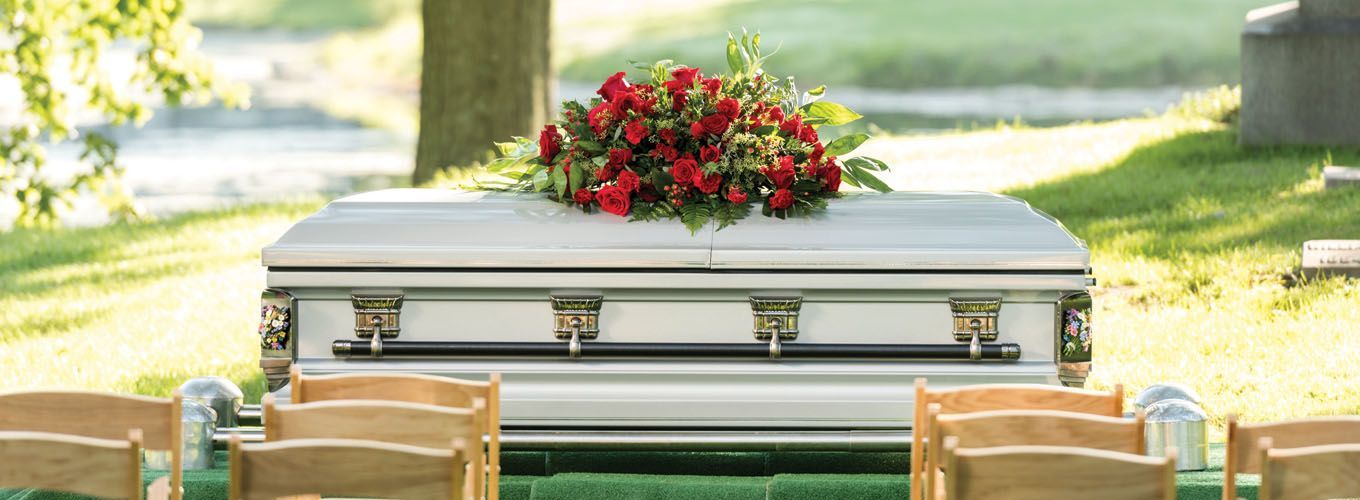
When we plan arrangements for the direct burial of an individual, we are expediting their interment. There will be no funeral, memorial service, or celebration-of-life; instead, we provide the physical care of the deceased (perhaps embalming their body, but certainly dressing and casketing) and then escort the casket to the cemetery for immediate burial. Direct burial is the simplest form of burial a funeral home can offer. The close family often has a brief, no-frills graveside service at the time of burial. Direct burial is an affordable, immediate way to bury your loved one. It is also simple and quick; it does not require any formal service or graveside ceremony before the body goes to its final resting place. There are multiple reasons why a direct burial might be the appropriate choice for your funeral services.
Does My Loved One Have to be Embalmed?
This is a question we hear a lot. Many funeral homes suggest (and may even go so far as to require) embalming if you are planning a viewing or visitation. That is because they want the experience to be as good as it can be for those in attendance, and proper embalming can ensure the deceased looks as good as possible. But as a rule, embalming is not necessary or legally required if the body is cared for in a relatively short amount of time. Please contact us for specific state or local requirements.
Is it Disrespectful to not to Have a Funeral?
No, some families want a simpler yet dignified burial with a celebration of one’s life later with friends and family. The choice is as unique as each individual family and many factors go into deciding what is best for your family and loved one. Many times, however, families stray from the funeral service regarding financial fear surrounding these costs. Please do not hesitate to ask your funeral director for further guidance or suggestions of how to memorialize your loved one in the best possible way to suit your needs and their memory.
How Much Does a Casket Cost?
The Federal Trade Commission states that average casket costs around $2,000. If you are concerned about casket costs, please speak with your funeral director who can advise you on the most appropriate casket for your situation and your budget.
What is a Vault or Outer Burial Container?
Today, modern cemetery grounds are well-groomed, with vast expanses of green grass. A burial vault protects this pristine view, ensuring there is no sign of burial plots "settling". Certainly, the vault also protects the casket; but the primary role of a burial vault is to protect the beauty of the cemetery environment.
What is Involved in a Cemetery Burial?
If your loved one has not made previous arrangements for their burial, leaving you to pick the location of their interment, the first thing you will need to do involves the selection of the cemetery and burial location within the grounds. You will also choose the most suitable casket and burial vault, and provide us with the clothing you would like your loved one to wear (and any 'special items' you would like us to place in the casket) . Once payment is made, the date and time of interment is agreed upon. At that time, the cemetery grounds keepers will take care of the "opening" and "closing" of the grave and the proper placement of the casket in the burial vault.
Do I Have to Buy a Headstone or Grave Marker?
The cemetery will put a temporary identification marker on your loved one's grave, but it is only intended as a placeholder until a permanent headstone or grave marker is set in place. Without one, your loved one's burial site will, when this temporary marker becomes illegible or is somehow removed, will appear "unmarked".
Where Do I Purchase a Headstone or Grave Marker?
We, and the cemetery where your loved one will be interred, have strong working relationships with trusted monument companies. When you are ready to order a granite headstone or bronze grave marker, we will come together to orchestrate its selection, manufacture, and placement. Speak with your funeral director to get the details.